
After fully training your chatbot, it should be answering visitor questions effectively.
However, there’s always room to further optimize your chatbot and improve your results. Through this process of continuous optimization, you’ll also learn more about your customers and how to best serve them.
The optimization process
The optimization process is quite simple:
- Review your recent chats
- Edit the training data
- Test the results
- Repeat
The first step is to open the Chats menu to review your chatbot’s recent conversations.
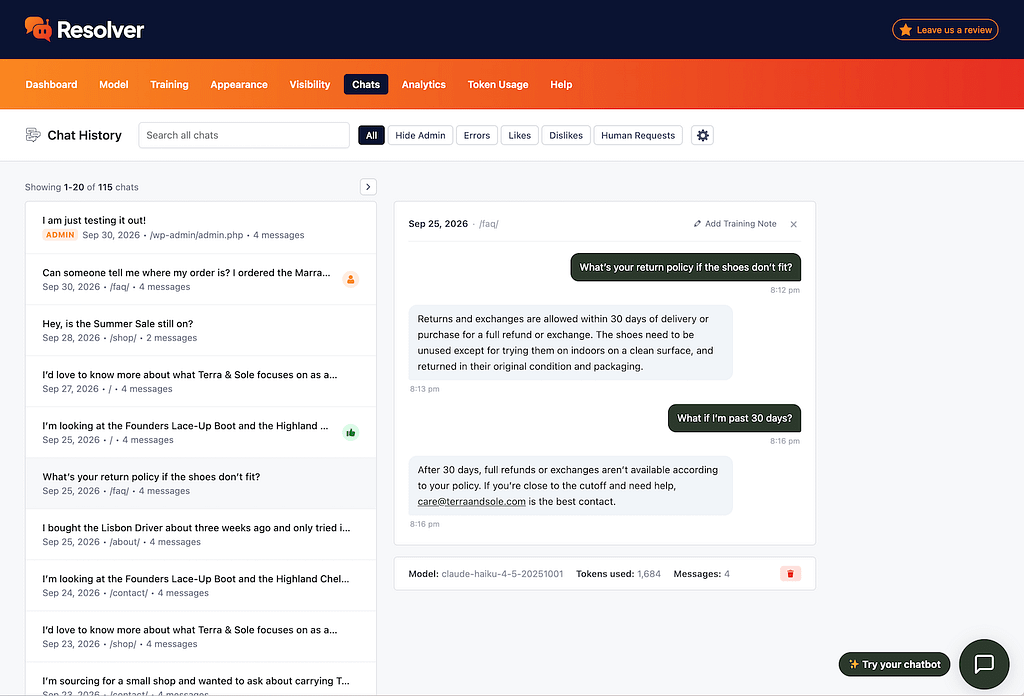
Starting from the top of the list, you can review each chat, see what the visitor is looking for, and assess the chatbot’s replies.
When you see a reply from your chatbot that could be improved, ask yourself why the chatbot failed to provide an adequate response.
Did the visitor ask a question that is not answered anywhere on your site? If so, you can update your content to directly address this question. This could mean:
- Writing a new knowledge base article
- Updating an existing page
- Adding a new FAQ
- Publishing a new training note
Once you’ve created this new content, send the exact same question to your chatbot and see how it replies. It should be able to answer the question easily now.
If you don’t like the tone of the chatbot or if it makes a recommendation it shouldn’t have, you can address this via the Instructions menu. That is the best way to tweak the chatbot’s overall behavior.
Streamlining the review process
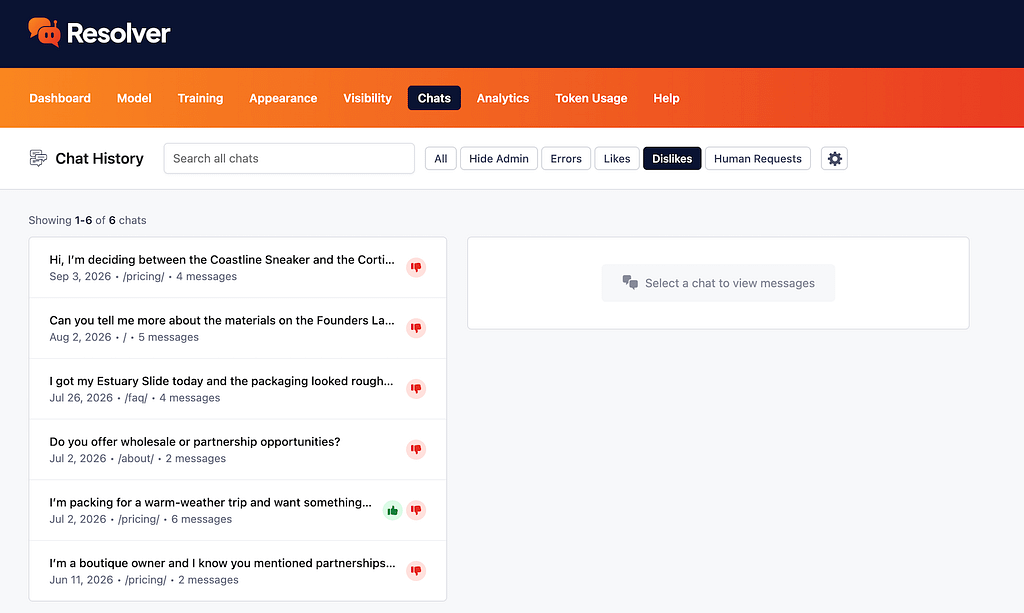
If you have lots of chats to go through and you’re finding it too tedious, Resolver Pro collects feedback from users, which makes it easier to spot failures.
For example, you can filter your chats by those that contain a Dislike to see messages that did not meet the visitor’s expectations.
You can also filter by chats that include a request for a human being.
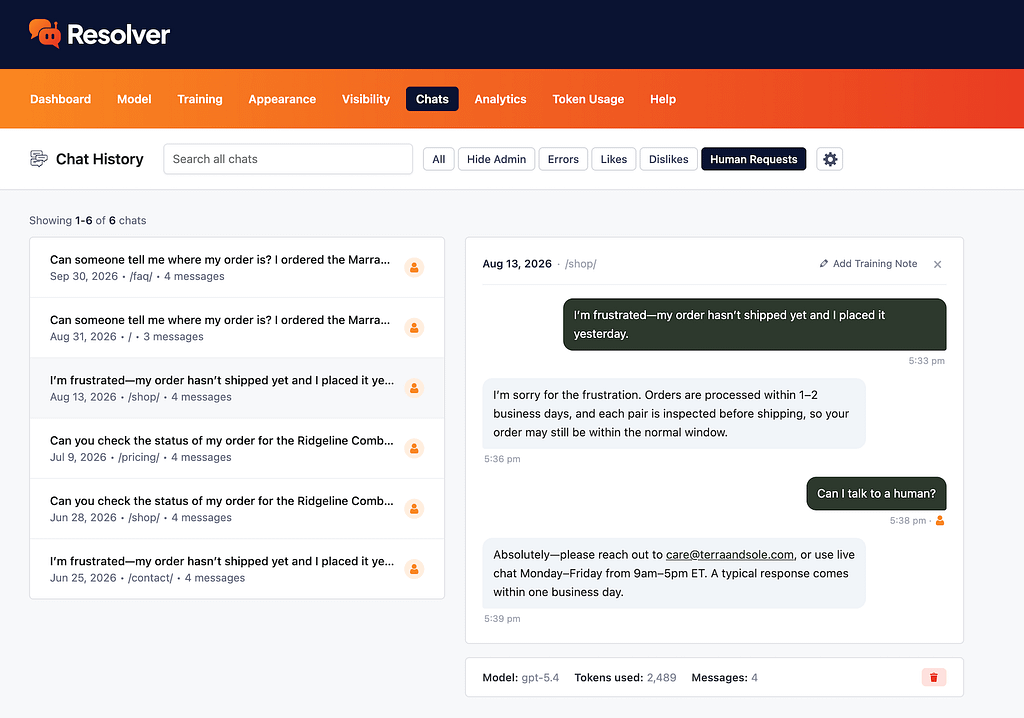
Optimizing for these requests in particular will ensure your chatbot is able to handle even more responses itself without guiding visitors to your support email.
If you put in the work to continuously optimize your chatbot, it will become an increasingly valuable asset for your business, and through the process, you’ll learn more about your customers and their needs.